

How Do Glass Clamps Work?
Glass clamps are a critical component in modern shower enclosures, toilet cubicles, and architectural glass installations. They provide a secure way to hold glass panels in position without drilling holes through the glass itself. While glass clamps appear simple from the outside, their internal structure and working principle are carefully engineered to balance holding strength, safety, and flexibility. This article explains how glass clamps work, how they interact with glass panels, and why proper clamp design is essential for long-term performance. The explanations reflect practical applications commonly seen in systems such as DALILAI toilet cubicle hardware and dedicated glass panel holder clamps used in professional installations.
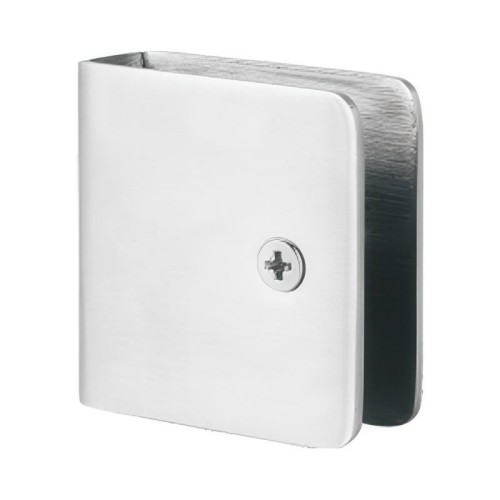
Table of Contents
- 1. The Basic Function of a Glass Clamp
- 2. Internal Structure and Pressure Distribution
- 3. Why Glass Clamps Do Not Rely on Extreme Tightness
- 4. How Glass Thickness and Clamp Size Work Together
- 5. How Glass Clamps Maintain Stability Over Time
- 6. The Role of Glass Clamps in Overall System Safety
- 7. Common Installation Mistakes That Affect Clamp Performance
- Conclusion
1. The Basic Function of a Glass Clamp
At its core, a glass clamp is designed to grip a glass panel and hold it in a fixed position relative to a wall, floor, or another panel. Unlike mechanical fasteners that penetrate materials, glass clamps rely on controlled pressure and friction.
A clamp consists of a metal housing and internal gaskets. When tightened, the housing compresses the gaskets evenly against the glass surface. This compression creates friction that resists movement while avoiding direct metal-to-glass contact. The goal is not to squeeze the glass as tightly as possible, but to apply uniform pressure that keeps the panel stable under normal use.
2. Internal Structure and Pressure Distribution
The internal design of a glass clamp is what determines how effectively it works. Inside the clamp body, soft yet durable gaskets are placed between the metal and the glass. These gaskets are usually made from rubber or similar elastomeric materials.
Their role is to:
Absorb vibration and minor movement
Protect glass edges from point pressure
Distribute clamping force evenly
Compensate for small thickness variations
When the clamp screws are tightened, the gaskets compress gradually, spreading force across a wider contact area. This prevents stress concentrations that could lead to cracking, especially near glass edges.
3. Why Glass Clamps Do Not Rely on Extreme Tightness
A common misconception is that glass clamps must be extremely tight to be safe. In reality, over-tightening is one of the most common causes of glass damage.
Glass is strong under compression but weak when subjected to uneven stress. Glass clamps are designed to hold panels securely with moderate, controlled force. The friction generated by the gasket material does most of the work, not brute mechanical pressure.
Properly designed clamps, such as those used in DALILAI Glass Panel Holder Clamp systems, are engineered so that correct tightening torque achieves sufficient holding strength without risking glass failure.
4. How Glass Thickness and Clamp Size Work Together
Glass clamps are manufactured to match specific glass thickness ranges. Using the correct clamp size is essential for both safety and performance.
| Glass Thickness | Typical Clamp Size | Result if Mismatched |
|---|---|---|
| 8 mm | Clamp with 8 mm gasket | Stable, even pressure |
| 10 mm | Clamp with 10 mm gasket | Secure, no movement |
| 12 mm | Clamp with 12 mm gasket | Proper load distribution |
| Incorrect match | Oversized or undersized | Slippage or stress risk |
If the clamp is too large, it may not generate enough friction. If too small, it can apply excessive localized pressure. This is why professional systems specify clamp dimensions precisely.
5. How Glass Clamps Maintain Stability Over Time
Glass installations are exposed to daily forces such as door movement, temperature changes, and building vibration. A well-designed clamp must maintain performance over years, not just at installation.
Key stability factors include:
High-quality metal housing that resists deformation
Gaskets that retain elasticity under humidity and heat
Secure fastening systems that resist loosening
In toilet cubicles and shower partitions, clamps must also tolerate frequent cleaning and moisture exposure. Hardware systems like DALILAI toilet cubicle hardware are designed with corrosion-resistant materials to ensure clamps continue working reliably in wet environments.
6. The Role of Glass Clamps in Overall System Safety
Glass clamps do not work in isolation. They are part of a larger system that includes profiles, support arms, and seals. Their job is to hold glass panels in position while allowing the system as a whole to accommodate movement.
Instead of Locking glass rigidly, clamps allow:
Controlled micro-movement under load
Thermal expansion without stress buildup
Adjustment during installation
This approach improves safety by preventing sudden stress release, which can lead to glass breakage. Clamps act as stabilizers rather than rigid anchors.
7. Common Installation Mistakes That Affect Clamp Performance
Even high-quality glass clamps can fail if installed incorrectly. Understanding how clamps work helps avoid these issues.
Common mistakes include:
Over-tightening screws
Using incorrect gasket thickness
Installing clamps on uneven surfaces
Allowing direct metal-to-glass contact
Professional installation guidelines emphasize gradual tightening and alignment checks. When clamps are installed as intended, they provide both strength and flexibility without compromising glass integrity.
Conclusion
Glass clamps work by applying controlled, evenly distributed pressure to hold glass panels securely without drilling or penetrating the glass. Their effectiveness depends on internal gasket design, correct sizing, proper tightening, and high-quality materials. Rather than relying on extreme force, glass clamps use friction and engineered tolerance to balance stability and safety. In modern shower enclosures and toilet cubicles, systems such as DALILAI Glass Panel Holder Clamps demonstrate how thoughtful clamp design supports long-term performance, protects glass panels, and ensures reliable operation in demanding environments.