

How Many Clamps for Fixed Shower Glass Panel?
When installing a fixed shower glass panel, one of the most frequent technical questions is how many clamps are actually required. The answer is not a single fixed number, because clamp quantity depends on glass size, thickness, fixing method, load distribution, and long-term safety considerations. Using too few clamps risks instability, while using too many can create unnecessary stress points on the glass. This article explains how to determine the correct number of clamps for a fixed shower glass panel, based on professional installation logic and real-world usage scenarios. The discussion reflects common practices in systems such as DALILAI toilet glass clamp holders and glass panel holder clamps, which are engineered for controlled load distribution and reliable long-term performance.
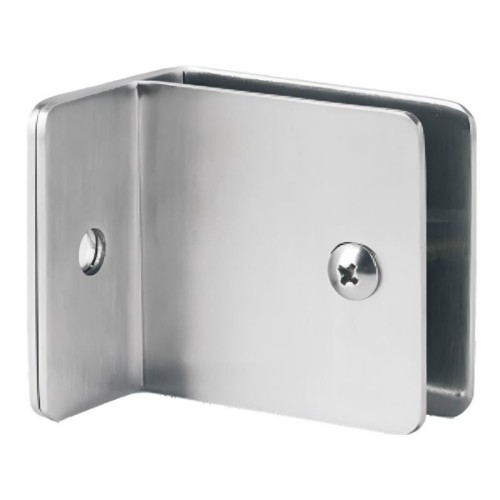
Table of Contents
- 1. Why Clamp Quantity Matters for Fixed Glass Panels
- 2. Core Factors That Determine Clamp Count
- 3. Typical Clamp Numbers Based on Panel Size
- 4. How Clamp Placement Is More Important Than Quantity
- 5. Glass Thickness and Its Influence on Clamp Requirements
- 6. The Role of Support Arms and Profiles in Reducing Clamp Count
- 7. Common Mistakes When Choosing Clamp Quantity
- Conclusion
1. Why Clamp Quantity Matters for Fixed Glass Panels
A fixed shower glass panel does not move like a door, but it still experiences constant forces. These forces include the weight of the glass itself, vibration from nearby doors, thermal expansion from hot showers, and minor building movement. Clamps are responsible for transferring these forces safely into the wall or floor without concentrating stress on the glass.
If too few clamps are used, each clamp must carry a higher load, increasing the risk of glass movement or edge stress. If too many clamps are installed, uneven tightening or alignment errors can introduce conflicting forces. The correct number of clamps ensures stability while preserving controlled tolerance.
2. Core Factors That Determine Clamp Count
There is no universal clamp number because every installation is different. Professionals evaluate several variables before deciding.
The most influential factors include:
Overall glass panel height and width
Glass thickness and weight
Orientation of the panel
Wall or floor fixing method
Presence of additional support elements
A taller or wider panel requires more fixing points to prevent flex, while thicker glass may reduce the need for additional clamps due to higher rigidity. Clamp quantity is therefore always a function of panel geometry, not aesthetics.
3. Typical Clamp Numbers Based on Panel Size
While exact requirements vary, industry practice provides reliable reference ranges for fixed shower glass panels.
| Glass Panel Height | Common Clamp Quantity | Typical Configuration |
|---|---|---|
| Up to 1200 mm | 2 clamps | Side wall fixing |
| 1200–1800 mm | 3 clamps | Two vertical, one lower |
| 1800–2200 mm | 4 clamps | Even vertical distribution |
| Over 2200 mm | 4–6 clamps | Combined with support arm |
These figures assume standard 8–12 mm tempered glass and vertical wall mounting. Floor-mounted panels or corner installations may require different arrangements.
4. How Clamp Placement Is More Important Than Quantity
Clamp positioning often has a greater impact than the number of clamps used. Poorly positioned clamps can leave sections of glass unsupported, even if the total count appears sufficient.
Effective placement principles include:
Distributing clamps evenly along the height
Avoiding clustering near one end
Keeping clamps away from glass corners
Aligning clamps with load paths
Clamps should stabilize the panel without Locking it rigidly. High-quality systems such as DALILAI Glass Panel Holder Clamps are designed to allow micro-adjustment during installation, helping installers fine-tune positioning without forcing the glass.
5. Glass Thickness and Its Influence on Clamp Requirements
Glass thickness directly affects structural stiffness. Thicker glass panels resist bending more effectively, which can reduce the need for additional clamps.
General guidance includes:
8 mm glass: requires more frequent support
10 mm glass: balanced rigidity and weight
12 mm glass: higher stiffness, fewer supports needed
However, thicker glass also weighs more, increasing load at each clamp. This is why clamp design and load rating are as important as clamp count. Systems such as DALILAI toilet glass clamp holders are engineered to handle higher static loads without compromising gasket performance.
6. The Role of Support Arms and Profiles in Reducing Clamp Count
Clamps do not always work alone. In many fixed shower glass installations, support arms or wall profiles share the load.
When additional support is present:
Clamp count may be reduced
Clamps act primarily as stabilizers
Load is redistributed more evenly
For tall or wide panels, a horizontal support arm can significantly reduce flex at the top edge, allowing clamps to focus on lateral stability rather than vertical load bearing. This integrated approach improves safety and reduces stress concentration.
7. Common Mistakes When Choosing Clamp Quantity
Mistakes in clamp selection often arise from misunderstanding how clamps work.
Typical errors include:
Using the minimum possible clamp count without considering panel size
Adding extra clamps without ensuring even alignment
Over-tightening to compensate for insufficient support
Ignoring glass thickness compatibility
These mistakes can lead to glass movement, gasket degradation, or long-term stress damage. Correct clamp quantity works together with proper sizing, gasket selection, and installation technique.
Conclusion
The number of clamps required for a fixed shower glass panel depends on panel dimensions, glass thickness, fixing method, and overall structural design. There is no single standard number, but professional installations typically use two to four clamps for most residential panels, with additional support for larger or taller glass. More important than quantity is correct placement, load distribution, and clamp quality. By using engineered solutions such as DALILAI Glass Panel Holder Clamps and Toilet Glass Clamp Holders, installers can achieve stable, safe, and durable glass installations that balance strength with controlled flexibility over long-term use.