

What Are The Different Hinge Mounting Options?
When buyers ask what are the different hinge mounting options, they are usually not only comparing hardware shapes. In real projects, hinge mounting affects door movement, installation method, load support, appearance, and long-term stability. A mounting option that works well for a timber swing door may not work well for a frameless glass panel. A bracket that fits one opening detail may create alignment problems in another. That is why hinge selection should never be separated from mounting structure.
In modern door systems, hinge mounting options are often chosen according to door material, frame condition, opening direction, and installation space. For standard interior doors, surface-mounted hinges may be enough. For concealed or architectural applications, recessed mounting may be preferred. For glass door systems, the mounting logic is different again, because the hardware must support the panel securely without treating the glass like a normal wood or metal door leaf. This is exactly where a Door Hinge Bracket becomes important. It is not only a small accessory. It is part of the connection structure that helps the hinge and the glass panel work together as one stable system.
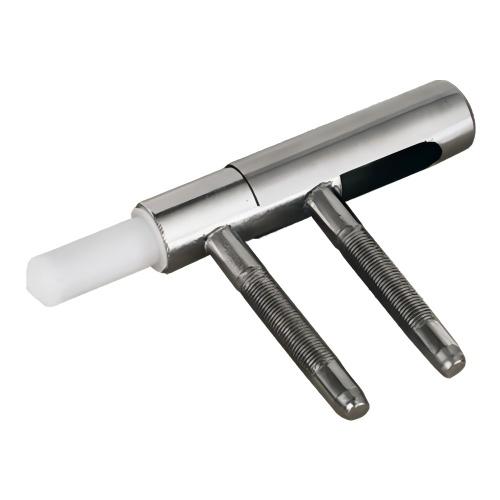
Table of Contents
- Why Hinge Mounting Options Matter More Than Many Buyers Expect
- Surface Mounted Options For Standard Doors
- Recessed And Concealed Mounting For Cleaner Design
- Clamp And Bracket Mounting In Glass Door Systems
- Frame Mounted And Structure Mounted Variations
- How To Choose The Right Mounting Option
- Why Material And Finish Still Matter
- Conclusion
Why Hinge Mounting Options Matter More Than Many Buyers Expect
Many people focus on hinge style first, but in project work the mounting option often matters more than appearance. If the hinge is mounted in the wrong way, the door may sag, bind, open unevenly, or wear out faster than expected. In glass door systems, the risk is even higher because the mounting method affects both support and safety.
For builders, contractors, distributors, and importers, this is a practical issue. A hinge may look acceptable in a catalog, but if the mounting structure is not compatible with the door thickness, frame type, or opening force, installation becomes more difficult and after-sales risk increases. That is why experienced buyers usually look at the mounting method first and the visible design second.
Surface Mounted Options For Standard Doors
One of the most common hinge mounting options is surface mounting. In this setup, the hinge is fixed directly onto the door and frame surface. It is widely used because installation is simple and replacement is easy. For timber doors, cabinet doors, and many standard interior openings, this remains a practical solution.
However, surface mounting is not always ideal in architectural glass systems or in projects that want a cleaner visual line. The hinge body remains visible, and the mounting structure may not suit frameless or semi-frameless designs. In these cases, buyers often move toward more specialized mounting hardware.
Recessed And Concealed Mounting For Cleaner Design
Another common option is recessed or concealed mounting. In this approach, part of the hinge or bracket sits within a prepared cutout so that the hardware appears more integrated with the door or frame. This can improve appearance and reduce protrusion, which is useful in premium interiors and space-conscious layouts.
But concealed mounting also demands better dimensional control. The opening depth, alignment, and hardware tolerance all need to be more precise. For B-end buyers, that means stable production quality becomes more important. If dimensions vary too much from one batch to another, installation time rises and the finished project loses consistency.
Clamp And Bracket Mounting In Glass Door Systems
Glass doors require a different approach because the panel cannot simply be treated like wood. In many glass door systems, clamp-style fittings or bracket-supported mounting are used to connect the hinge assembly to the glass securely. This is where the mounting option becomes more technical.
A Door Hinge Bracket plays a key role here because it helps connect and support the hinge structure while keeping the glass door stable during opening and closing. Our product is designed as a connecting and supporting accessory for glass door systems, helping the glass door attach securely to the hinge structure for smooth movement and accurate positioning. It uses steel construction with a zinc-plated surface, and the body is designed to handle wear, corrosion, torque, and axial load more effectively in repeated-use conditions.
For project buyers, this matters because Glass Hardware is not only about visual effect. It is about whether the mounting point remains dependable after frequent daily use. A weak bracket can affect hinge performance, but a stable bracket helps the whole system work more reliably.
Frame Mounted And Structure Mounted Variations
Within hinge systems, mounting can also differ based on where the main support sits. Some options depend mostly on the door frame. Others are more structure-mounted, where the bracket or hinge assembly transfers load into a fixed surrounding element. This distinction is important in commercial glass doors, partition systems, and public passageway projects.
A well-chosen bracket helps solve this problem by improving the connection between the moving door panel and the fixed hinge structure. Our product uses a compact design with a total length of 65 mm and evenly distributed mounting bolt diameters, which helps it fit more tightly in door frames of different thicknesses. That kind of dimensional clarity is useful for contractors and distributors because it supports more predictable installation planning.
How To Choose The Right Mounting Option
The right hinge mounting option depends on several practical questions. What material is the door made from. Is it timber, aluminum, or glass. Is the opening framed or frameless. Does the project require visible hardware or a more concealed look. How often will the door be used. Is the project residential, hospitality, office, or public access.
For B-end customers, the last question is often the most important: can this mounting option reduce installation trouble and hold up across repeated orders. In wholesale and project supply, buyers do not only need one sample that looks good. They need hardware that installs consistently, performs reliably, and fits the market they are serving.
Why Material And Finish Still Matter
Even when the mounting method is correct, material and surface treatment still affect the result. Hardware used in humid or high-traffic environments needs better wear and corrosion performance than hardware used in light interior applications. That is why buyers often compare not only mounting type, but also material and finish as part of the same decision.
Our Door Hinge Bracket uses steel with zinc plating, which supports better wear resistance and corrosion resistance in regular service conditions. For many buyers, that is a practical balance between structural support and cost control. In larger procurement programs, this also helps with product positioning across different channels.
Conclusion
So, what are the different hinge mounting options? In simple terms, they include surface-mounted, recessed or concealed, frame-mounted, and bracket-supported solutions, with glass door systems requiring more specialized support than standard solid doors. The right choice depends on the door material, the opening structure, the design goal, and the expected frequency of use.
For glass doors in particular, a Door Hinge Bracket is more than a small fitting. It helps create the connection that supports stable opening, accurate positioning, and longer service life. If you are reviewing hinge mounting options for glass doors, comparing hardware for distribution, or looking for OEM or ODM support for your market, feel free to contact us. Share your door type, frame detail, or project requirement, and we can help you match a more suitable hinge bracket solution.
Previous: