
How to Choose Mortise Locks That Meet Both Fire Rating and Security Requirements for Export Door Markets?
In commercial construction and door exporting, hardware compliance isn't just a legal checkbox—it is the financial backbone of your entire contract. The single biggest nightmare for a project procurement manager is having a local fire marshal refuse the building’s Certificate of Occupancy because the door hardware lacks the right international certs. If the installed Locks fail site testing, the entire batch has to be ripped out and replaced. This triggers heavy contractor fines, ruined timelines, and a complete collapse of project profits.
The main engineering challenge is that fire safety and physical security require opposite mechanical behaviors. A security lock is built to stay locked tight against brute force, while a fire door lock must guarantee that occupants can escape instantly without a key during a crisis, all while holding the door frame closed against warping heat. Balancing these two demands requires a deep understanding of metallurgy.
Table of Contents
Metallurgical Integrity Under High-Temperature Stress
During a commercial fire, temperatures can easily exceed 800 degrees Celsius within minutes. Under this extreme heat, low-grade alloys like zinc or cheap aluminum will soften and melt. If the internal springs or latch mechanisms fail, the pressure created by the fire will blow the door open, feeding the flames and letting toxic smoke engulf emergency exit stairwells.
To prevent this dangerous failure mode, specifying a heavy-duty Stainless Steel Mortise Lock box is an absolute engineering requirement for any export-grade door package. Grade 304 or 316 stainless steel has a melting point well above 1,400 degrees Celsius, ensuring that the latch bolt remains physically intact and extended into the strike plate throughout the critical burning window. A certified Stainless Steel Mortise Lock from our production floor relies on these high-temperature alloys for both the outer casing and the critical internal levers, satisfying the strict continuous-latch integrity rules required by UL 10C and EN 12209 export frameworks.
Balancing Security Defense with Emergency Panic Egress
While holding a door closed against a fire is critical, the hardware must also stop unauthorized entry from the outside during normal business hours. This means the lock needs anti-saw rollers inside the deadbolt and anti-friction latch mechanisms to resist physical tampering. The internal engineering must utilize a split-spindle design: the exterior remains locked against intruders, but a single downward push on the interior lever retracts both the latch and the deadbolt instantly.
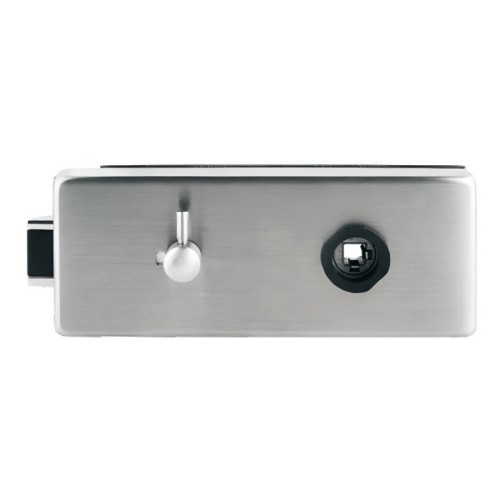
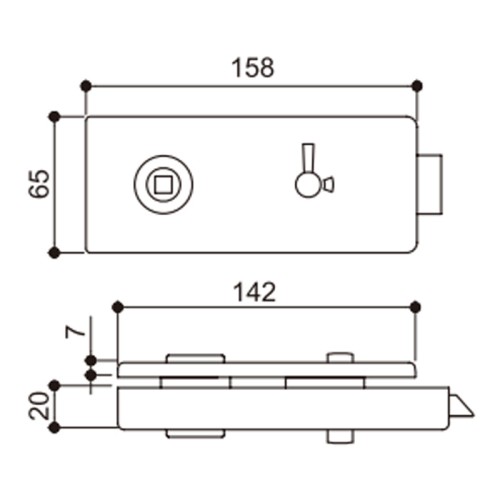
When managing large commercial layouts, project managers frequently face the challenge of coordinating hardware across different types of openings. For example, a single floor plan might feature heavy wood fire doors for the utility shafts alongside modern frameless glass entries for executive offices. To keep the security integration and surface finishes identical across the entire facility, our factory floor engineers specialized locking variants for every architectural medium. If your layout features these high-end open-plan zones, matching your primary fire-door hardware with our
Eliminating Sourcing Risk via Verified Technical Assurance
For volume importers, buying unverified locks from trading companies that frequently change sub-contractors introduces an unacceptable level of risk. A slight shift in the chemical purity of the steel wire used for an internal spring can cause a lock to fail batch testing, ruining a multi-million-dollar contract.
Our casting and assembly facility removes this unpredictability by practicing total vertical control over our metal forging. Every production run of our Stainless Steel Mortise Lock units undergoes rigorous hardness testing, side-load latch pressure checks, and cycle testing before moving to final packaging. Because we manage the toolmaking, die-casting, and finishing processes in our own workshops, we can guarantee that the dimensions and alloy ratios on the test certificate match the actual hardware delivered to your container, passing strict local building inspections without field failure write-offs.
Conclusion
Ensuring safety and compliance on a commercial job site comes down to choosing hardware that can handle both heavy physical abuse and high thermal stress. By standardizing your project bids on stainless steel lock structures that separate panic egress from external access control, you safeguard your business from expensive building code failures.
If you are currently drafting a hardware schedule for an upcoming overseas project, or if you are running into strict compliance pushback from site inspectors, our technical team is here to help you clear the hurdle. Send over your architectural door schedules, fire-rating specs, or required cylinder configurations today. Our engineers will review your local code requirements, cross-reference your layout drawings, and prepare a direct factory wholesale quote complete with all the necessary technical data to guarantee a smooth, delay-free inspection sign-off.